By Jacob | VistaTrailers LLC
The right enclosed trailer needs to fit your cargo, give you room to load and secure it, and stay within your tow vehicle’s capabilities. Start with what you plan to haul, then check the actual interior dimensions, door opening, and payload before choosing a size.
Whether you’re hauling tools around Oakland, TN, moving furniture, or transporting a vehicle across the country, these checks can help you avoid buying a trailer that falls short on the first job.
Start with your cargo—not just the trailer’s advertised size
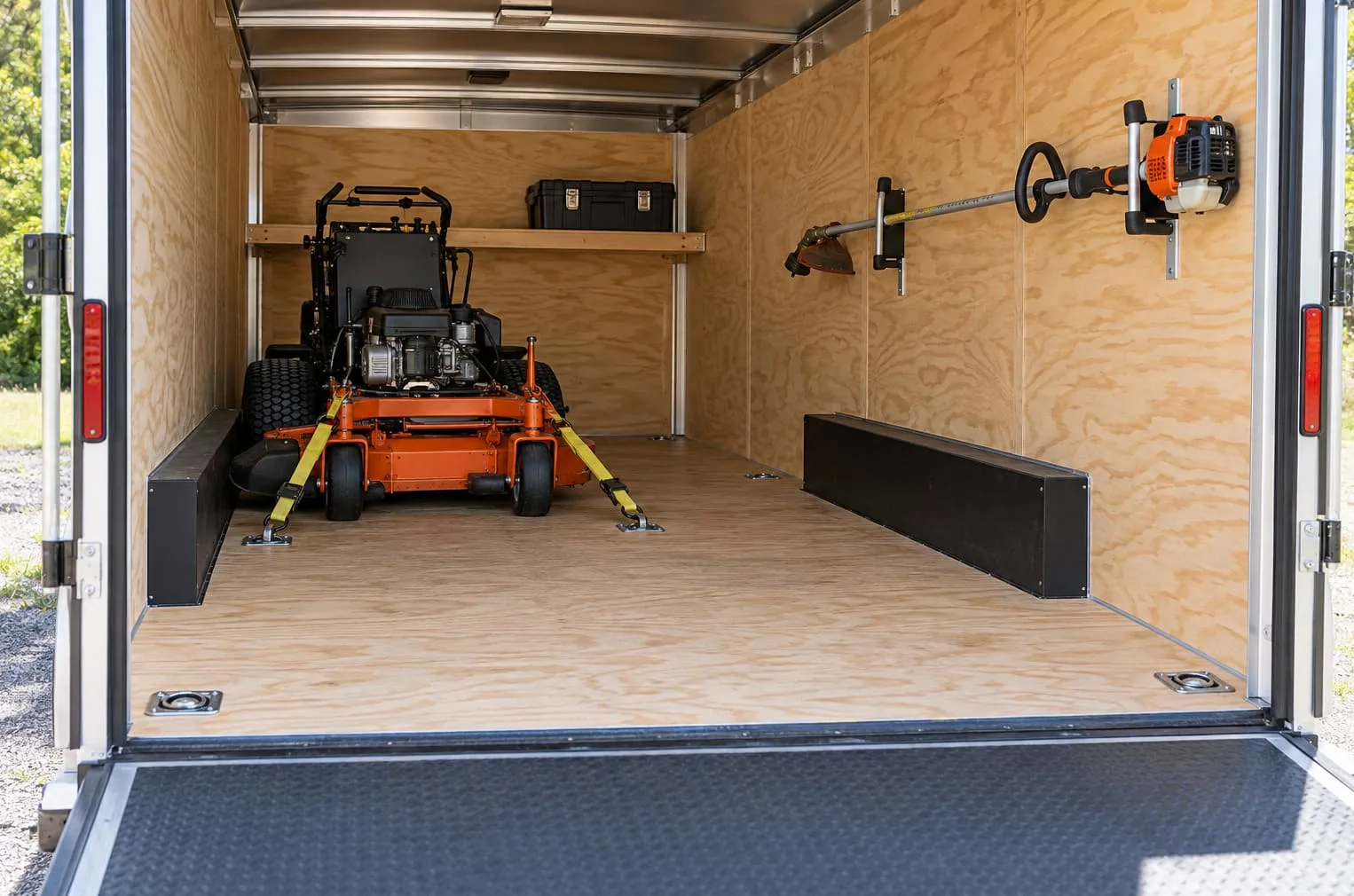
Make a list of the largest items you’ll carry together. Measure their length, width, height, and weight, including any attachments or accessories.
Then think about how you’ll use the trailer. Will you need shelves for tools? A walkway between equipment? Room to open a vehicle door or reach tie-down points?
A mower that fits inside can still leave you without room for fuel cans, trimmers, and other tools. Likewise, a vehicle may fit lengthwise but leave too little space to secure it comfortably.
One useful approach is to mark the proposed usable floor space on your shop floor or driveway. Arrange your equipment inside that outline and leave room for loading and access.
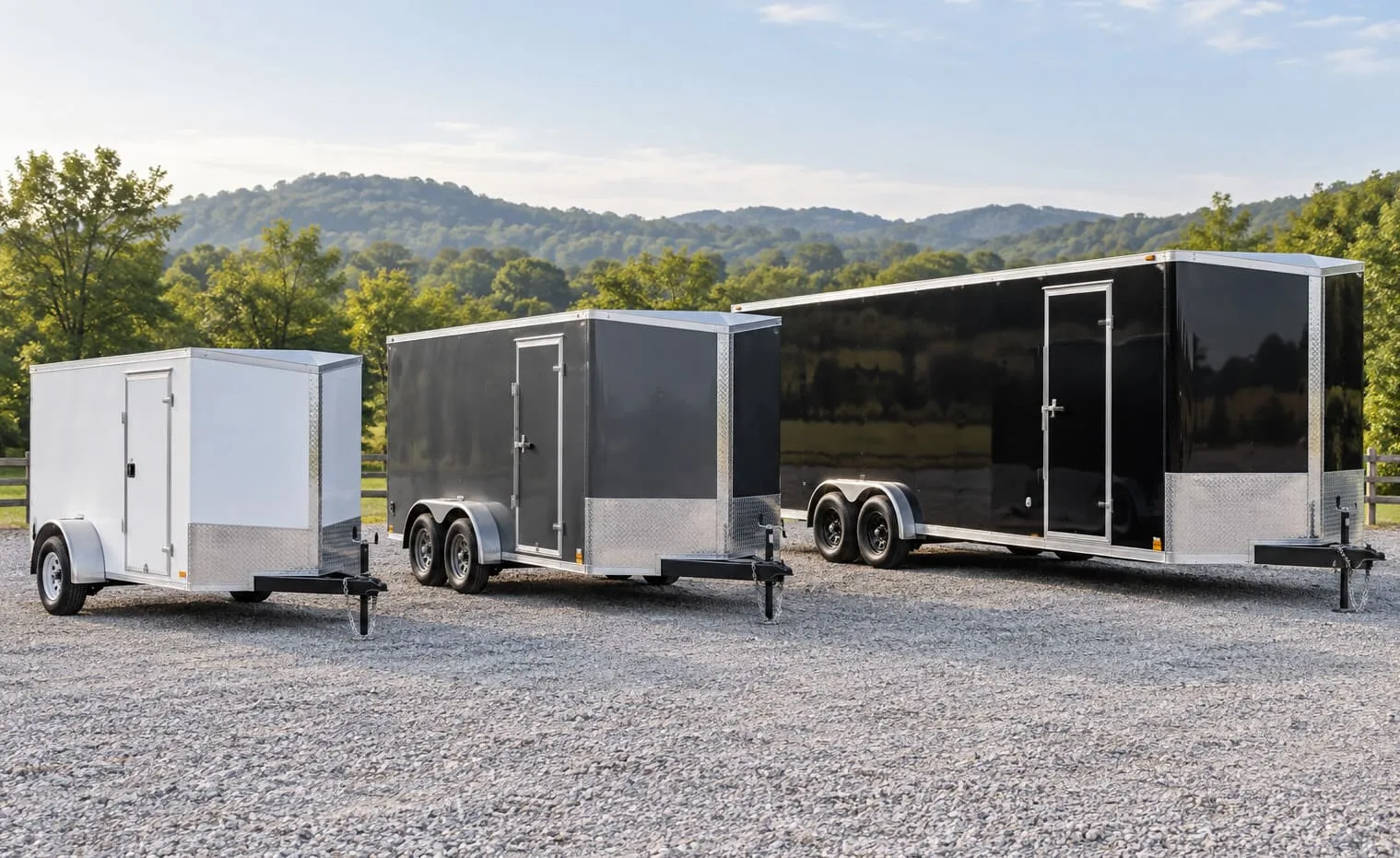
Common enclosed trailer sizes and uses
These are starting points for comparing sizes, not guarantees that a particular item will fit.
| Advertised size | Uses to consider | What to check |
|---|---|---|
| 5×8 or 5×10 | Tools, smaller deliveries, and household items | Whether your largest item fits through the door |
| 6×12 | Contractor tools, motorcycles, and smaller equipment | Space remaining for storage and tie-down access |
| 7×14 or 7×16 | Landscaping equipment, mobile businesses, and larger loads | Your equipment layout, working space, and total cargo weight |
| 8.5×20 or larger | Vehicle transport, race setups, and bulky equipment | Width between wheel wells, vehicle length, and room to exit and secure it |
Actual usable space varies by manufacturer and configuration. Check the specific trailer rather than relying on its size label alone.
Check interior height and the door opening separately
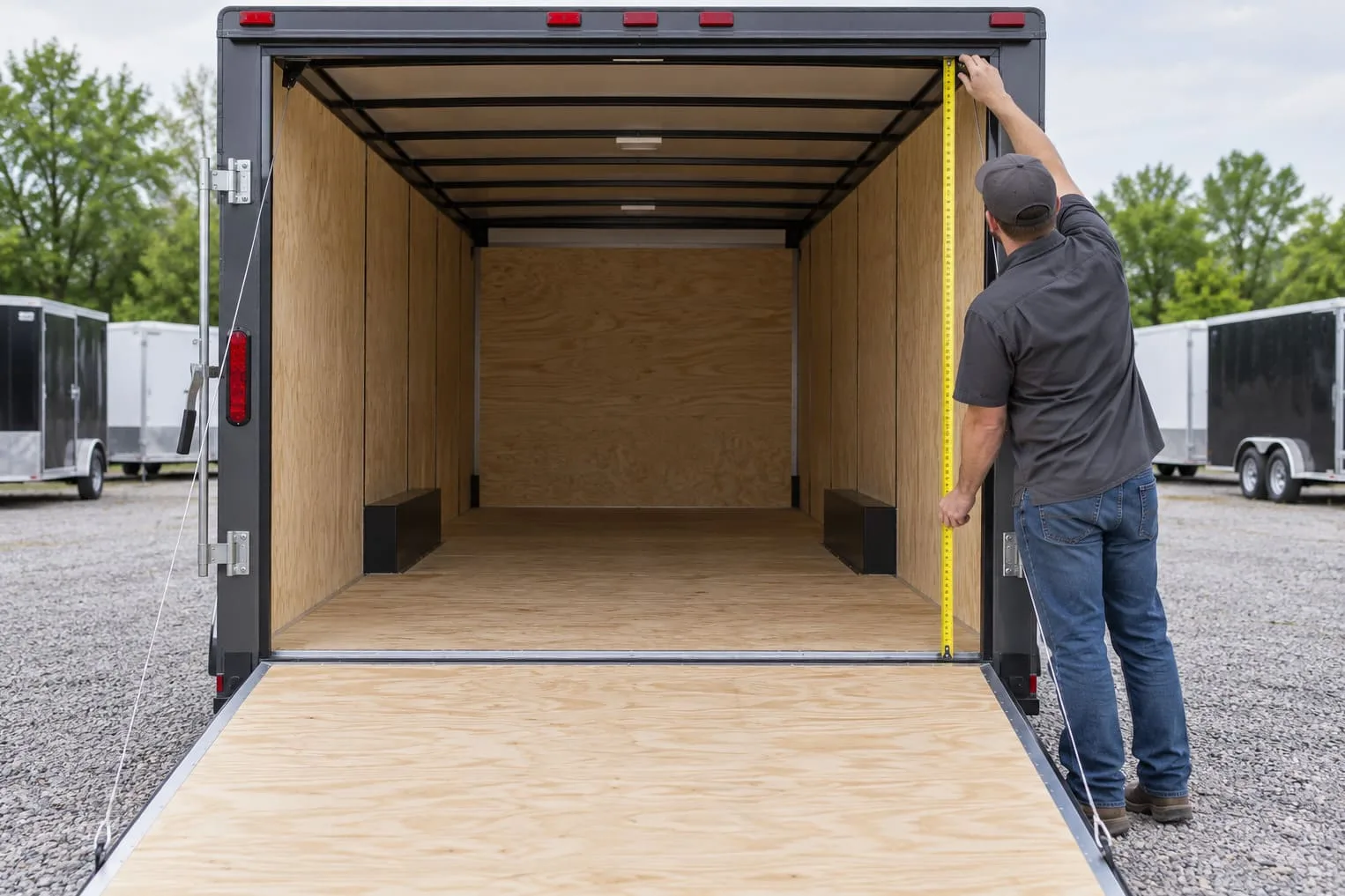
Interior height and loading clearance are two different measurements. A trailer with a seven-foot interior height may have a shorter rear opening.
For tall equipment, measure to its highest fixed point and compare that measurement with the opening. For vehicles, also consider ground clearance and the ramp transition. Enough room inside doesn’t necessarily mean the vehicle can enter without scraping.
If you’ll spend time working inside, consider standing room beneath any lights, shelves, or planned ceiling additions.
Match payload capacity to the job
Two trailers with the same dimensions can have different weight ratings. Floor space tells you what might fit; payload tells you how much cargo the trailer can carry.
GVWR is the maximum rated total weight of the loaded trailer, including the trailer itself. For a basic illustration, a trailer rated at 7,000 pounds that weighs 2,500 pounds empty has 4,500 pounds remaining before reaching that rating. Added shelving, spare tires, tools, and other equipment use part of that allowance.
Check the specific trailer’s ratings and weight information. Your tow vehicle, hitch, tires, and axle limits also matter. A truck’s advertised maximum tow rating alone doesn’t confirm that your particular loaded setup is suitable; passengers, truck cargo, and trailer tongue weight affect the available capacity.
Choose the door style around how you load
A ramp door makes sense when you need to roll equipment or vehicles into the trailer. Confirm the ramp’s rating and dimensions for your intended load.
Barn doors can suit customers who load by hand or use suitable loading equipment and prefer swinging rear doors. Think about the space available behind the trailer at your usual loading locations, too.
Plan for the next job, too
A little extra room can help if you expect to add equipment or storage. But extra size also affects parking, maneuvering, towing, and where you can store the trailer.
Choose around your expected workload and tow vehicle—not just the largest trailer you can purchase.
Get help choosing your enclosed trailer
At VistaTrailers LLC, we can help you compare enclosed trailers based on what you haul and how you plan to use them. Send us your cargo measurements, approximate loaded weight, and tow vehicle details so we can help narrow down suitable options.
Browse our enclosed trailer inventory or contact us about a custom build. We’re located in Oakland, TN, with NATIONWIDE DELIVERY AVAILABLE. Visits are by appointment, so call before coming to the lot.
The size comparisons are general buying guidance, not specifications for any individual trailer.